Hoh Xil, in Mongolian, means "Beautiful Girl." Averaging more than 4,600 metres above sea level, it is one of the highest and largest highland wildernesses on Earth — and the last pure refuge of the Tibetan antelope.
History · Timeline
3 key moments- 1Since the late Tertiary
The plateau rises
The Tibetan Plateau keeps uplifting; Hoh Xil becomes an uninhabited land above 4,600 metres
- 21995
Sonam Dargye gives his life
The deputy party secretary of Zhiduo county dies fighting poachers to protect the Tibetan antelope
- 32017
Inscribed as World Heritage
Selected under criteria (vii) and (x); among the largest highland wilderness properties on the list
Prologue · A Maiden in the Wind
In July, in the first light over the shore of Zhuonai Lake, a Tibetan antelope steps onto the lakeside grass.
In Mongolian, “Hoh Xil” means “Beautiful Girl.” Averaging more than 4,600 metres above sea level, it is one of the highest and largest highland wildernesses on Earth; glaciers, snow peaks, lakes and alpine steppe spread across her lap. This land, close to a “no-man’s-land,” is the last pure refuge of the Tibetan antelope.
The loveliest faces are often the most hidden. Hoh Xil hides her beauty deep in snow and wind — and hides her life where no one is watching.
The Birth of a Highland
Since the late Tertiary, the Indian plate has kept drifting north, the Tibetan Plateau has risen, and Hoh Xil has become a wilderness above 4,600 metres where people can hardly settle.
There are no villages here, no kitchen smoke — only wind sculpting snow into waves and polishing the lake surfaces to mirrors. Zhuonai Lake and the Sun Lakes are scattered like sapphires; even today, you may find them on a map and still find no road that leads to them.
The Summer Calving Ground
But the wilderness is not empty. Every summer, tens of thousands of Tibetan antelopes converge on Zhuonai Lake to give birth — one of the most spectacular animal migrations on Earth.
It is the loudest season of the year in Hoh Xil: mother antelopes drop their calves on the lakeshore, and within days the calves can run beside their mothers. Herders watch from afar, scholars record from afar — this silent wilderness, it turns out, hides a great migration of life, arriving year after year, on time.
Gunshots Across the Wilderness
In the 1980s and 90s, a crime set its eyes on this “beautiful girl.” The shahtoosh trade made the shawls dear on international markets; the black hand of smuggling reached the highland, and the antelopes were slaughtered.
Gunshots broke the stillness of the wilderness. Only then did people understand: to guard this “beautiful girl,” someone had to stand up.
Sonam Dargye’s Last Battle
In 1995, Sonam Dargye, deputy party secretary of Zhiduo county, died fighting poachers — his name became a symbol of antelope protection.
Sonam Dargye fell, but the guarding did not fall. Reserves were established one after another; anti-poaching patrols drove deep into the uninhabited land again and again, and the antelope population gradually recovered. On today’s Zhuonai shore the gunfire has faded, and the hoofbeats of newborn calves ring out once more.
2017: The Maiden Goes to the World
In 2017, Qinghai Hoh Xil was inscribed on the World Heritage List under criteria (vii) and (x), covering about 37,400 km² — among the largest highland wilderness properties in the world.
Snow mountains, lakes, grasslands and running antelopes form one of the purest natural scenes on Earth. The heritage list has gained a “beautiful girl” — no longer a secret land that no one knows, but a home all of humanity guards together.
Epilogue · The Maiden Stays Young
Another July; in the first light over the shore of Zhuonai Lake, a newborn Tibetan antelope steps onto the lakeside grass.
Long ago the highland rose here; within a few decades gunfire rang out and faded — and the maiden stays young: the glaciers in her lap are still growing, the lakes still breathe, and the antelopes come again, year after year, as promised.
Outstanding Universal Value (OUV)
- Criterion (vii): The magnificent landscape of highland glaciers, lakes and alpine steppe has unsurpassed natural beauty.
- Criterion (x): As a habitat for the Tibetan antelope and other plateau endemics, it is of major importance to global biodiversity conservation.
Facts at a Glance
- Average elevation above 4,600 m; about 37,400 km² in area
- A key calving ground of the Tibetan antelope; inscribed in 2017
Gallery

Highland landscape of Hoh Xil
Wikimedia Commons / 始见 · CC BY 2.5 cn
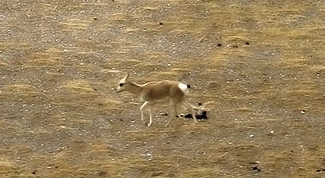
Tibetan gazelle in Hoh Xil
Wikimedia Commons / B_cool from SIN, Singapore · CC BY 2.0

Landforms of eastern Hoh Xil
Wikimedia Commons / leej1118bj · CC BY 3.0

Grasslands of Hoh Xil
Wikimedia Commons / leej1118bj · CC BY 3.0
Sources & Citation
- Official listing:UNESCO World Heritage Centre —— 青海可可西里
- Managing authority:https://sjy.qinghai.gov.cn/jgsz/
- Cover credit:Wikimedia Commons / 始见 (CC BY 2.5 cn)
This is a public-interest open-source project; all data is strictly sourced. If you find an error or a mis-attributed image, please report it through the correction channel and we will fix it promptly.Report an error.