In the mist, the granite peaks of Mount Sanqingshan rise like swords and bamboo shoots, and a Daoist temple appears and vanishes on Yujing Peak. This is the Daoist 'open-air museum' and the world's textbook of granite peak forest.
History · Timeline
4 key moments- 1Jin dynasty
Ge Hong refines elixirs
The Daoist master Ge Hong builds a retreat on the mountain to refine elixirs, beginning its Daoist history
- 2Tang–Song
Daoism flourishes
Temples multiply on the mountain, making Sanqingshan a celebrated Daoist mountain south of the Yangtze
- 3Jingtai era, Ming
The Sanqing Temple is rebuilt
The reconstruction of the Sanqing Temple is completed, making it the centre of Daoism on the mountain
- 42008
Inscribed as World Heritage
Selected under criterion (vii)
Prologue: Stones Above the Clouds
At dawn one early autumn, a hiker stood on the plank path of the West Coast of Mount Sanqingshan.
Beneath his feet was a bottomless gorge; before him, a rolling sea of clouds. Suddenly a rift opened in the clouds — a granite pillar burst through, rising like a python lifting its head from the mountain’s body. He held his breath as the “Giant Python Emerging from the Mountain” caught a rim of golden light at sunrise.
What he did not know was this: for this single moment, the mountain had been waiting for hundreds of millions of years.
A Carving of Ten Thousand Years
Hundreds of millions of years ago, this place was nothing but a granite mass buried deep underground.
Through the long ages the rock rose and rose; joints cut through it like blades; rain and weathering wore it away layer by layer. Nature’s carving was never in a hurry — it took aeons to shape the rock into what we see today: peaks rising like swords and bamboo shoots, stone columns piercing the sky, deep gorges, and niches set here and there. The “Giant Python Emerging from the Mountain,” the “Goddess of Spring,” “Guanyin Appreciating the Melody” — one fantastic pinnacle after another, as lifelike as if someone had staged a frozen drama among the mountains. This is a natural “granite museum,” and every stone is a manuscript written by time.
Ge Hong’s Elixir Furnace
In the Eastern Jin, a Daoist master came here to build a hermitage and refine elixirs.
His name was Ge Hong, a celebrated alchemist in the history of Daoism. In a humble hut among the peaks, he kept watch over his furnace while the clouds came and went and the peak forest brightened and dimmed. The furnace’s flame has long since gone out — but the trace this master left behind gave Mount Sanqingshan its first breath of the “Way.” For a thousand years and more, Daoists followed in his footsteps up the mountain, and temple after temple rose among the crags.
The Bell of the Sanqing Temple
From the Song dynasty onward, the Daoist temples of Sanqingshan multiplied; the incense never ceased, and the mountain became a celebrated Daoist mountain south of the Yangtze.
In the Jingtai era of the Ming, the Sanqing Temple was rebuilt on the mountain, and on the day of its completion it became the centre of the Quanzhen (Complete Perfection) school. For five hundred years since, halls and shrines have spread across the slopes, and more than two hundred survive to this day. The Daoists carved the words “the Way follows nature” into the mountain rock, and they carved the relation between man and mountain into the very orientation of their buildings — the mountain is the sanctuary, and the sanctuary is the landscape.
2008: A Textbook of Granite
In 2008, Mount Sanqingshan was inscribed on the World Heritage List under criterion (vii).
What the World Heritage Committee prized was the irreplaceable geomorphological value of this granite peak forest — its form, combination and beauty, hailed as “the textbook of the world’s granite peak forests.” Today the plank paths of the West Coast and the Sunshine Coast hang on sheer cliffs, cable cars carry visitors up into the sea of clouds, and the main peak Yujing at 1,819.9 metres turns this thousand-year Daoist mountain into a “journey above the clouds” for countless travellers.
Epilogue: When the Clouds Part
At dawn again, the sea of clouds wells up from the valley and floods over the plank path of the West Coast.
When the clouds part, the pillar bursts through once more, like a python lifting its head. And you understand at last: the day this mountain waited for was never the day it was inscribed on a list — it was every moment a visitor held his breath and watched the pillar pierce the clouds. Hundreds of millions of years of waiting, and at last someone understood.
Outstanding Universal Value (OUV)
- Criterion (vii): The form, combination and aesthetic value of Sanqingshan’s granite peak forest are without parallel among the world’s landforms of its kind.
Facts at a Glance
- Main peak Yujing at 1,819.9 m
- Inscribed in 2008; more than 200 Daoist halls and shrines survive
Gallery

Sea of clouds over Mount Sanqingshan
Wikimedia Commons / Huangdan2060 · CC0
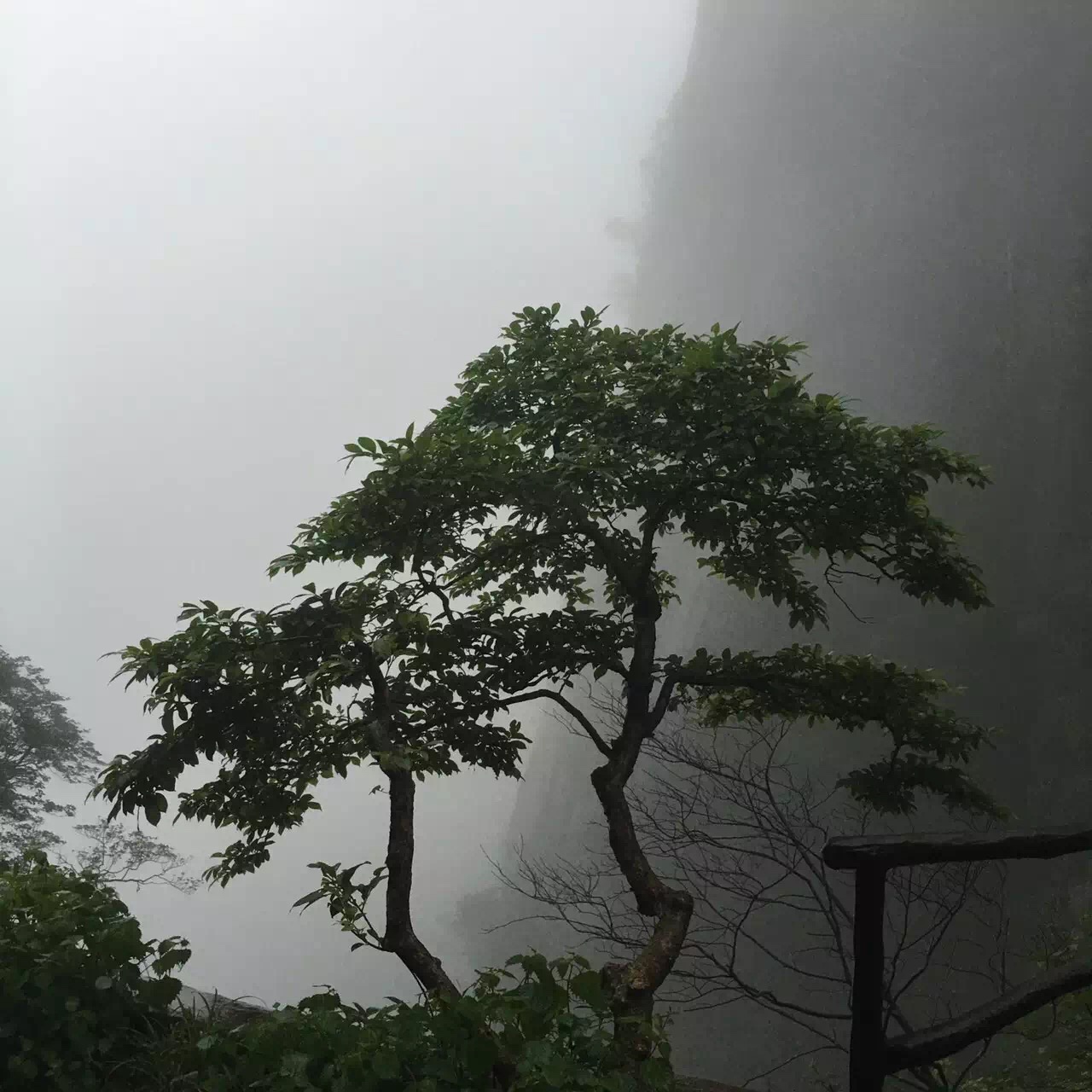
Granite peak forest of Mount Sanqingshan
Wikimedia Commons / Huangdan2060 · CC0

The 'Giant Python Emerging from the Mountain' at Mount Sanqingshan
Wikimedia Commons / Zhangzhugang · CC BY-SA 3.0

Scenery of Mount Sanqingshan
Wikimedia Commons / xiquinhosilva · CC BY 2.0
Sources & Citation
- Official listing:UNESCO World Heritage Centre —— 三清山国家公园
- Managing authority:http://www.zgsr.gov.cn/
- Cover credit:Wikimedia Commons / Huangdan2060 (CC0)
This is a public-interest open-source project; all data is strictly sourced. If you find an error or a mis-attributed image, please report it through the correction channel and we will fix it promptly.Report an error.