Along the cliffs at the foot of Wuzhou Mountain, more than fifty thousand statues line the hillside: the colossal open-air Buddha of Cave 20, lips slightly parted, has sat in silence for fifteen hundred years. The Yungang Grottoes — a faith written in stone by the Northern Wei dynasty.
History · Timeline
4 key moments- 1460–465
The Five Caves of Tanyao are carved
The monk Tanyao, by order of Emperor Wencheng, carves five caves casting the emperors as Buddhas
- 2494
The capital moves to Luoyang
The great carving at Yungang ends; work continues in smaller caves and niches
- 3Liao and Jin dynasties
Temples are rebuilt
Monasteries rise before the caves to shelter them, restoring some facade buildings
- 42001
Inscribed as World Heritage
Selected under criteria (i), (ii), (iii) and (iv)
Prologue · A Face That Has Sat for Fifteen Hundred Years
The first light of morning falls on the cliff of Cave 20 at the foot of Wuzhou Mountain and illuminates a face that has sat there for fifteen hundred years.
Lips slightly parted, gaze lowered, steadier than the mountain. Visitors look up at it, and it looks back — no one can quite say who, in which year, with what in his heart, carved so vast a Buddha into the rock. The answer lies at the dawn of a dynasty.
The Five Caves of Tanyao
In 460, at the western edge of Pingcheng, capital of the Northern Wei (today’s Datong), the chisels struck into Wuzhou Mountain.
The eminent monk Tanyao, by command of Emperor Wencheng, began carving five caves — the celebrated “Five Caves of Tanyao.” The principal Buddhas of the five caves were modelled on the Northern Wei emperors: “the emperor is the Buddha,” merging imperial power with the Buddhist realm. The open-air Great Buddha of Cave 20 stands 13.7 metres tall, of imposing vigour, the most representative image of Yungang. The chisels would strike for thirty years more.
The Sinicisation of Stone
The carving of the Yungang Grottoes spanned the early and middle Northern Wei — a history of reform written in stone.
The early statues are vigorous and massive, stamped with the Gandharan style that came from the Western Regions. In 494, Emperor Xiaowen moved the capital to Luoyang; the great carving at Yungang came to an end, and work turned to smaller caves and niches. The images shifted toward the refined Central Plains manner of “clear-eyed elegance and loose robes” — the Buddha trading nomadic dress for Han robes, the sinicising reforms of the Northern Wei carved into rock. Yungang preserves 45 major caves and more than 51,000 statues — a whole sutra of stone beneath Wuzhou Mountain.
Guardians After the Chisels Fell Silent
Dynasties changed and the chisels fell silent, but the guardianship never stopped.
During the Liao and Jin dynasties, monasteries were raised before the caves to shelter them, restoring some of the facade buildings. In the centuries since, wind and rain have gnawed at the cliff, and generation after generation of conservators has mended cracks and documented the statues — so that a faith from fifteen hundred years ago would not dissolve into time.
Today · The Gaze Beneath Wuzhou Mountain
In 2001, the Yungang Grottoes were inscribed on the World Heritage List under criteria (i), (ii), (iii) and (iv), ranking with the Mogao Grottoes of Dunhuang and the Longmen Grottoes of Luoyang as China’s three great cave complexes.
The Great Buddha of Cave 20 still sits at the foot of Wuzhou Mountain; the chisels of the Northern Wei are long silent, but the smile of that “Eastern Mona Lisa” still passes on to every visitor the faith and the bearing of fifteen hundred years ago.
Epilogue · The Smile Remains
The morning light will come again, and the face that has sat for fifteen hundred years will greet another millennium.
Everyone who leaves Yungang remembers one thing: chisels fall silent and dynasties scatter, but a heart that wanted to leave something behind can outlast stone.
Outstanding Universal Value (OUV)
- Criterion (i): Fusing Chinese and Western art, the Yungang statues are a pinnacle of Buddhist stone carving.
- Criterion (ii): The Yungang Grottoes profoundly influenced the cave art of northern China and of East Asia.
- Criterion (iii): As the imperial caves of the Northern Wei, they are an exceptional testimony to the Sinicisation of Buddhism.
- Criterion (iv): The cave forms and sculptural groupings are outstanding examples of early Buddhist cave temples.
Facts at a Glance
- 45 major caves and more than 51,000 statues surviving
- Carved 460–494; inscribed in 2001
Gallery

The open-air Great Buddha of Cave 20, Yungang Grottoes
Wikimedia Commons / Dudva · CC0

Exterior of the Yungang cave chambers
Wikimedia Commons / Dudva · CC0
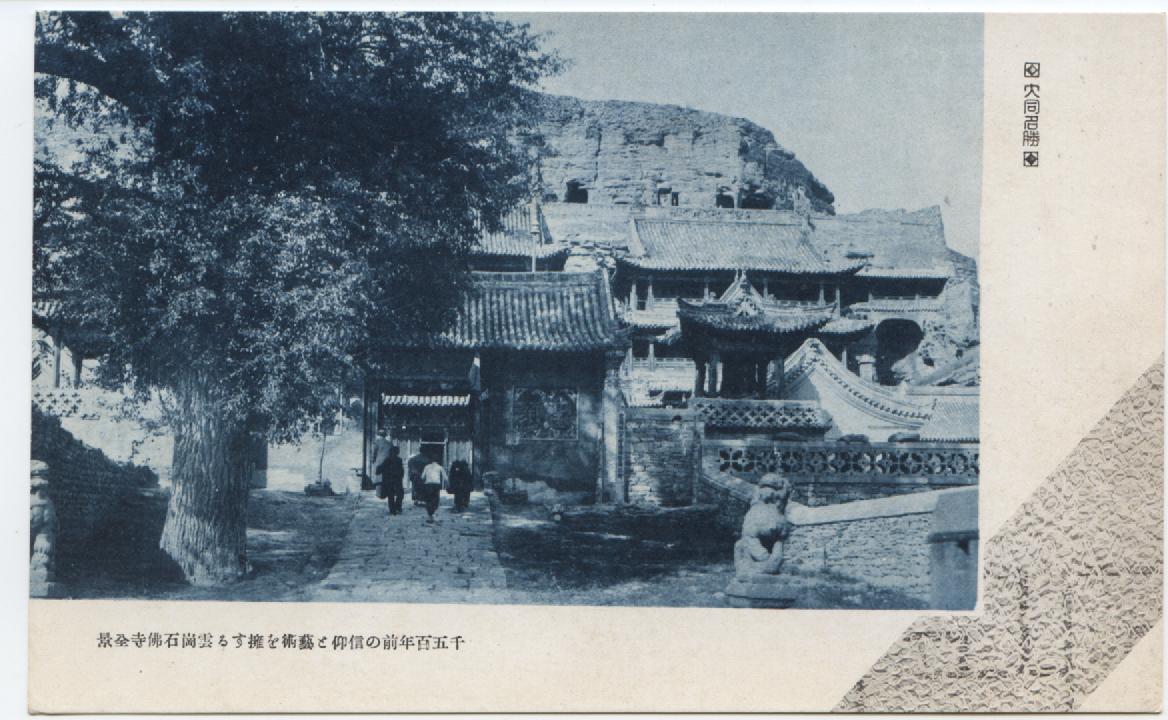
The Yungang Grottoes and temple buildings
Wikimedia Commons / Anonymous. The postcard set was published in Keijo(Today Seoul) in 1939. · Public domain

Carved statues inside the Yungang Grottoes
Wikimedia Commons / Mathew Toll · CC BY-SA 4.0
Sources & Citation
- Official listing:UNESCO World Heritage Centre —— 云冈石窟
- Managing authority:https://www.yungang.org
- Cover credit:Wikimedia Commons / Dudva (CC0)
This is a public-interest open-source project; all data is strictly sourced. If you find an error or a mis-attributed image, please report it through the correction channel and we will fix it promptly.Report an error.